English
 French
 German
 Italian


If you asked most people some years ago how solar power works, they would probably give you a very confusing answer. Most used to think solar power was something very complex, something only engineers could understand. But the truth is, solar power is actually very simple when you break it down.
We have seen solar power change lives in Nigeria. We have seen homes that used to stay in darkness enjoy steady light. We have seen small businesses grow because they no longer depend on fuel or NEPA. That is why we want to explain how solar power works in this guide.
This explanation is from experience, observation, and learning over time. By the time you finish reading this, you will understand how solar power works, why it is important, and why many Nigerians are turning to it.
What Solar Power Means
Solar power simply means using energy from the sun to produce electricity.
Every day, the sun shines on our roofs, roads, farms, and open land. That sunlight carries energy. Solar power is the method of collecting that energy and turning it into electricity that we can use to power our homes, charge our phones, run our TVs, fans, fridges, and even big machines.
The sun does not send electricity directly. What it sends is light energy. Solar power systems are built to capture that light and convert it into electrical energy.
That is all solar power is about. Capturing sunlight and turning it into electricity.
Why The Sun Is Powerful Enough To Give Us Electricity
The sun is very powerful. It is so powerful that the light we receive in just one hour is enough to power the whole world for a year if we could store it properly.
In Nigeria, we are lucky because we have plenty of sunlight. Most parts of the country enjoy strong sunlight almost every day of the year. This makes solar power a very good option for us.
The sun shines freely. It does not send bills. It does not go on strike. It does not need fuel. As long as the sun rises, solar power can work.
Main Parts Of A Solar Power System
To understand how solar power works, you must first understand the main parts of a solar power system. Think of it like cooking. You need a pot, stove, gas, and food. Solar power also has its own important parts.
The major parts include
• The solar panels
• The inverter
• The batteries
• The charge controller
• The wiring.
Each part has a role to play. If one part is missing or faulty, the system may not work well.
Solar Panels And What They Do
Solar panels are the flat boards you see on rooftops or open spaces. They are usually dark in color, mostly blue or black. The job of the solar panel is to collect sunlight.
Inside each solar panel are small units called solar cells. These cells are made from special materials that can react when sunlight touches them. When sunlight hits these cells, it creates electric movement inside them.
This movement produces electricity. The electricity that comes directly from the solar panel is not the same type we use in our homes. It is called direct current electricity.
So at this stage, the solar panel has done its job. It has collected sunlight and turned it into direct current electricity.
How Solar Panels Generate Electricity
Imagine sunlight as rain falling on a roof. The roof collects the rain and directs it into a gutter. In the same way, solar panels collect sunlight and direct the energy into electric flow.
When sunlight hits the solar cells, tiny particles inside the cells begin to move. This movement creates electrical energy. Wires connected to the panel carry this electricity out.
The stronger the sunlight, the more electricity the panel produces. That is why solar power works better during the day.
What Happens When There Is No Sun
This is one question many people ask. What happens at night or when it is cloudy?
This is where batteries come in.
Solar power systems do not rely on sunlight alone. They store energy for later use.
During the day, when the sun is shining, the solar panels produce electricity. Some of that electricity is used immediately. The remaining electricity is stored in batteries.
At night or when there is little sunlight, the stored energy in the batteries is used to power your home.
Role Of Solar Batteries
Solar batteries store electricity. Think of batteries as water tanks. When water flows in during the day, the tank stores it. At night, you use the stored water. That is exactly how solar batteries work.
During the day, excess electricity produced by the solar panels is sent into the batteries. The batteries keep this electricity safely.
When there is no sunlight, the batteries release the stored electricity so you can still have power. Without batteries, solar power would only work when the sun is shining.
Types Of Solar Batteries Common In Nigeria
In Nigeria, you will mostly find these types of solar batteries.
• Lead acid batteries
• Gel batteries
• Lithium batteries
Lead acid batteries are cheaper but do not last very long.
Gel batteries last longer and are safer but cost more.
Lithium batteries are the best and last the longest, but they are also the most expensive.
The choice depends on your budget and how much power you need.
What An Inverter Does In A Solar System
The inverter is one of the most important parts of a solar power system.
Remember earlier I said that solar panels produce direct current electricity. But the electricity used in our homes is alternating current electricity.
Your TV, fan, fridge, and sockets all use alternating current.
The inverter changes the direct current electricity from the solar panels and batteries into alternating current electricity that your home can use. Without an inverter, the electricity from the solar panels would not be useful for most household appliances.
How The Inverter Works
Think of the inverter as a translator. The solar panel speaks one language. Your home appliances speak another language. The inverter translates the electricity into a language your appliances understand.
Once the inverter does this, the electricity is ready to be used safely in your home. Some inverters also help manage how electricity flows between the panels, batteries, and appliances.
Charge Controller
The charge controller protects the batteries. When solar panels produce electricity, they can sometimes send too much power to the batteries. This can damage the batteries.
The charge controller controls how much electricity enters the batteries. It makes sure the batteries are charged properly without being damaged.
It also prevents electricity from flowing back from the batteries to the panels at night. In short, the charge controller helps the batteries last longer.
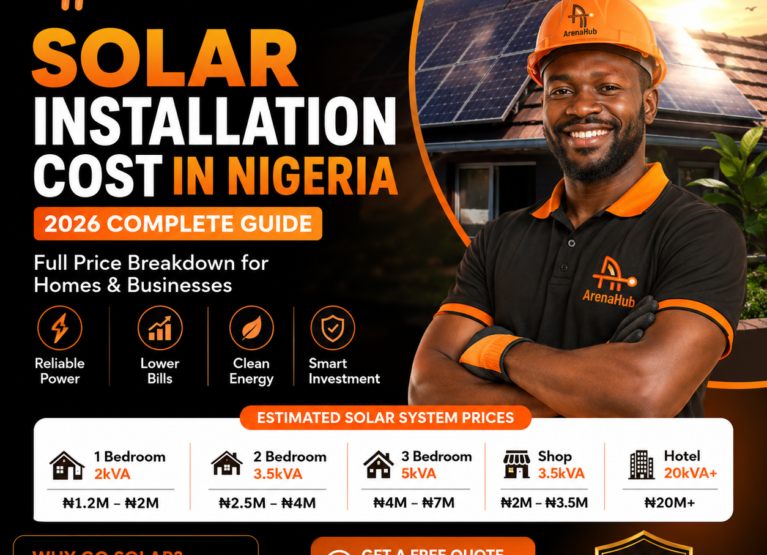
Read Also: Complete Solar Power System Price in Nigeria (2026 Breakdown)
How All The Parts Work Together
To understand how solar power works, let us look at the full process step by step.
• Sunlight shines on the solar panels
• The solar panels convert sunlight into direct current electricity
• The electricity flows through wires to the charge controller
• The charge controller regulates the electricity and sends it to the batteries
• The batteries store the electricity
• The inverter converts stored electricity into alternating current
• The electricity powers your home appliances
That is the full journey of solar power from the sun to your bulb.
How Much Sun Is Needed For Solar Power To Work
Solar panels do not need extreme heat. They need light. Even on cloudy days, solar panels can still produce electricity, although less. Nigeria receives enough sunlight daily to power solar systems effectively.
Most solar systems are designed to store enough energy during the day to last through the night.
How Solar Power Saves Money Over Time
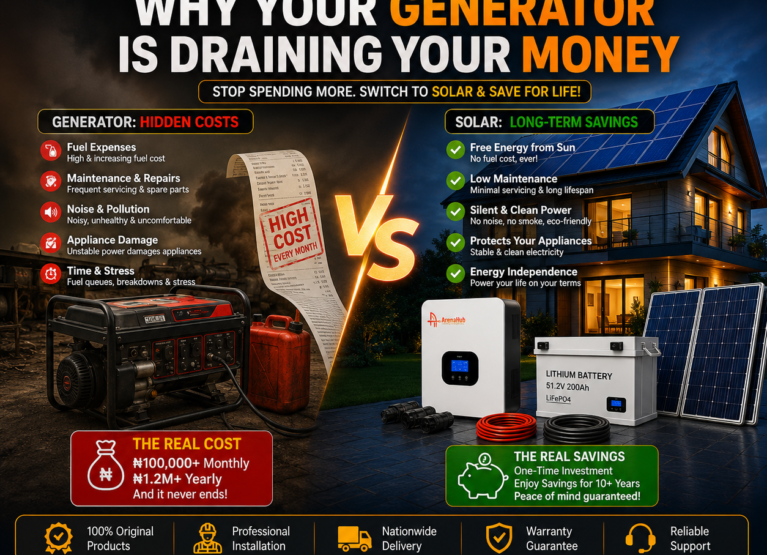
Solar power may look expensive at first. The panels, batteries, and inverter cost money. But once installed, the running cost is very low. There is no fuel to buy. There is little maintenance. The sun is free.
Over time, the money saved from fuel and generator repairs can cover the cost of the solar system. That is why many people see solar power as a long term investment.
How Long Solar Panels Last
Solar panels are built to last. Most quality solar panels can last 20 to 30 years. They do not have moving parts, so they do not break easily.
As long as they are installed properly and kept clean, they can work for many years. Solar batteries may need replacement after some years, but panels last very long.
Is Solar Power Safe
Solar power is very safe when installed correctly. There is no risk of fire from fuel. There is no carbon monoxide poisoning. There is no loud noise.
The main safety issue is proper installation. Wires must be connected well. Batteries must be handled properly. That is why it is important to use trained installers.
Frequently Asked Questions
Does Solar Power Work At Night?
Solar power does not produce electricity at night, but stored energy in batteries is used.
Is Solar Power Expensive?
The initial cost can be high, but it saves money over time.
Can Solar Power Work During Rain?
Yes, but it produces less electricity when sunlight is weak.
How Long Does Installation Take?
Most home systems can be installed within one or two days.
Do I Still Need NEPA With Solar?
Some people use both. Others rely fully on solar.
Read Also: How Much Can Solar Power Save You Monthly?
Conclusion
Solar power works by capturing sunlight and turning it into electricity that we can use in our homes. It is simple, clean, and reliable when properly installed. In a country like Nigeria where power supply is not stable, solar power offers hope and independence. With the right system and proper understanding, solar power can change how we live, work, and grow.