English
 French
 German
 Italian

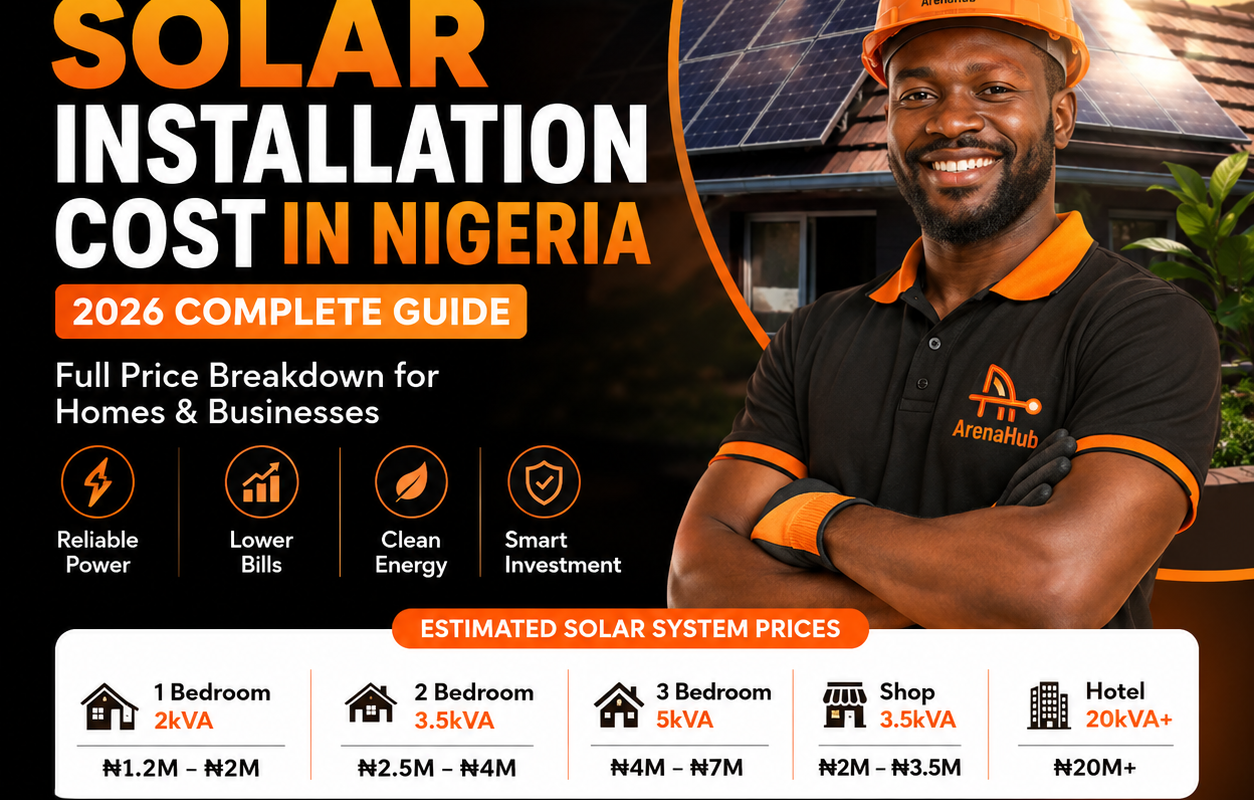

Table of Contents
ToggleSolar Installation Cost in Nigeria (2026): Full Price Breakdown for Homes & Businesses
Electricity has become one of the biggest challenges for homes and businesses in Nigeria. From unstable power supply to rising fuel prices, many Nigerians are now turning to solar energy as a smarter and more reliable alternative.
But one of the most common questions people ask is the following:
“How much does solar installation cost in Nigeria?”
The truth is that solar prices depend on several factors, including your energy needs, battery capacity, inverter size, and the quality of components used.
In this detailed guide, we’ll break down:
- Solar installation costs in Nigeria,
- pricing for homes and businesses,
- What affects the cost?
- how to avoid costly mistakes,
- and how to choose the right solar setup for your budget.
Whether you live in Lagos, Abuja, Port Harcourt, Warri, or anywhere in Nigeria, this guide will help you make the right decision.
Why Solar Energy Is Growing Fast in Nigeria
Nigeria’s electricity challenges have pushed many households and business owners toward alternative power solutions.
Here are some reasons why solar is booming:
- Rising diesel and petrol costs
- Frequent blackouts
- High electricity bills
- Noise pollution from generators
- Need for 24/7 power
- Better battery technology
- Long-term savings
Unlike generators, solar systems provide silent, clean, and reliable electricity without daily fuel expenses.
What Determines Solar Installation Cost in Nigeria?
The cost of installing solar depends on several important factors.
1. Your Power Consumption
The more appliances you want to power, the bigger the system you need.
For example:
- a small shop needs less power than a hotel,
- while a 3-bedroom flat requires more batteries and panels than a single-room apartment.
2. Inverter Capacity
The inverter converts solar energy into usable electricity.
Popular sizes include:
- 2kVA
- 3.5kVA
- 5kVA
- 10kVA
- 15kVA and above
Larger inverters cost more but can power heavier appliances.
3. Battery Type
Battery choice significantly affects price.
Tubular Batteries
- cheaper initially,
- require maintenance,
- shorter lifespan.
Lithium Batteries
- more expensive,
- longer lifespan,
- faster charging,
- maintenance-free,
- better performance.
Most premium solar installations in Nigeria now use lithium batteries.
4. Number of Solar Panels
Your battery capacity determines how many panels are needed.
The more batteries you install:
- the more panels required,
- The higher the total cost.
5. Installation Complexity
Installation costs vary depending on the following:
- roof type,
- wiring distance,
- mounting structure,
- property size,
- and electrical upgrades.
Average Solar Installation Cost in Nigeria (2026)
Below is an estimated price guide for common solar setups in Nigeria.
| Property Type | Recommended System | Estimated Cost |
|---|---|---|
| Single Room | 1.5kVA – 2kVA | ₦900,000 – ₦1.8 Million |
| 1 Bedroom Flat | 2kVA – 3.5kVA | ₦1.5 Million – ₦3 Million |
| 2 Bedroom Flat | 3.5kVA – 5kVA | ₦3 Million – ₦5 Million |
| 3 Bedroom Flat | 5kVA – 10kVA | ₦5 Million – ₦10 Million |
| Shop/Small Business | 3.5kVA – 5kVA | ₦2 Million – ₦5 Million |
| Hotel | 15kVA – 50kVA+ | ₦20 Million+ |
| Hospital | 20kVA – 100kVA+ | ₦30 Million+ |
Prices vary depending on battery brand, inverter type, and installation requirements.

Solar Installation Cost in Nigeria
What Can a 5kVA Solar System Power?
A properly configured 5kVA solar system can comfortably power:
- TVs
- Fans
- Lights
- Refrigerators
- Freezers
- Laptops
- WiFi routers
- Washing machine
- Small pumping machine
- Some air conditioners
This makes it one of the most popular setups for Nigerian homes and businesses.
Detailed Cost Breakdown of a 5kVA Solar System
| Component | Estimated Price |
|---|---|
| 5kVA Hybrid Inverter | ₦700,000 – ₦1.8 Million |
| Lithium Batteries | ₦1.5 Million – ₦4 Million |
| Solar Panels | ₦1 Million – ₦2.5 Million |
| Installation & Accessories | ₦200,000 – ₦500,000 |
Estimated Total:
₦4 Million – ₦8 Million
Lithium vs. Tubular Batteries: Which Is Better?
| Feature | Lithium Battery | Tubular Battery |
|---|---|---|
| Lifespan | 8–15 Years | 3–5 Years |
| Maintenance | Low | High |
| Charging Speed | Faster | Slower |
| Weight | Lightweight | Heavy |
| Performance | Excellent | Moderate |
| Price | Higher | Lower |
If your budget allows, lithium batteries are usually the better long-term investment.
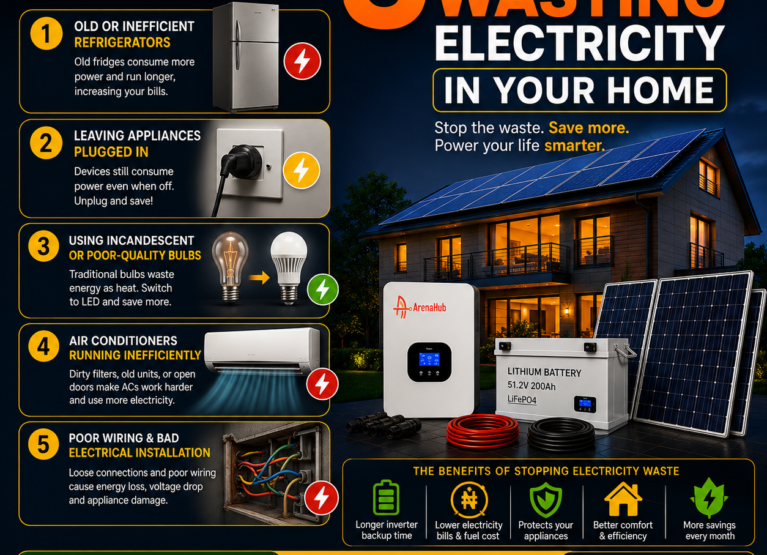
Also Check: 5 Things Wasting Electricity in Your Home (2026 Guide)
Generator vs. Solar: Which Saves More Money?
Many Nigerians still rely heavily on generators.
But generators come with:
- constant fuel expenses,
- servicing,
- engine repairs,
- noise,
- and pollution.
Cost Comparison
| Feature | Generator | Solar |
|---|---|---|
| Fuel Cost | Daily | None |
| Noise | Loud | Silent |
| Maintenance | Frequent | Minimal |
| Long-Term Savings | Low | High |
| Environmental Impact | Polluting | Clean |
Although solar requires a bigger initial investment, it saves significantly more money over time.
Common Mistakes People Make When Installing Solar
1. Buying Cheap Batteries
Low-quality batteries fail quickly and increase replacement costs.
2. Using Inexperienced Installers
Poor installation can damage expensive equipment.
3. Choosing the Wrong System Size
Undersized systems lead to overload problems and poor performance.
4. Ignoring Future Expansion
It’s smarter to install a scalable system that can grow with your needs.
How to Choose the Right Solar Installer in Nigeria
Before choosing a solar company, check for:
- installation experience,
- warranty,
- customer reviews,
- quality components,
- after-sales support,
- and proper load assessment.
A professional installer should first calculate your power usage before recommending a system.
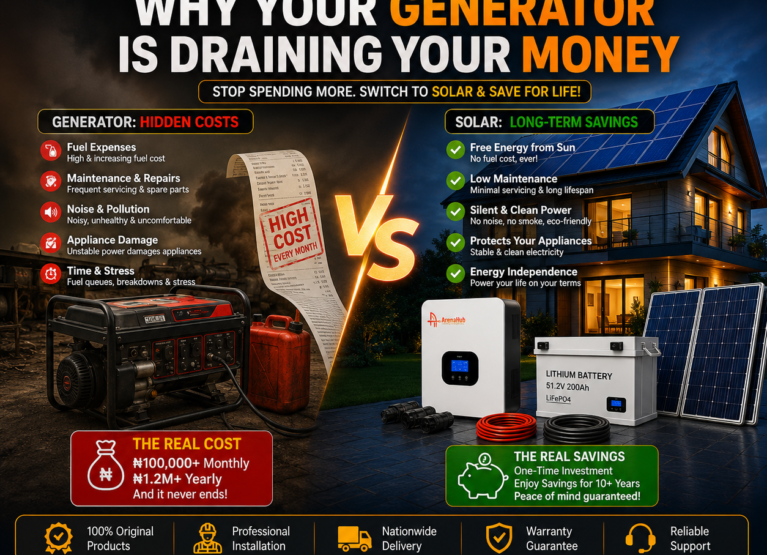
Also Check: Why Your Generator Is Draining Your Money (2026 Guide)
Why Businesses Are Switching to Solar
Businesses across Lagos, Abuja, Port Harcourt, and Warri are moving to solar because the following are true:
- diesel costs are rising,
- Customers prefer stable environments,
- and operating costs are increasing.
Solar helps businesses.
- reduce expenses,
- improve productivity,
- and operate during blackouts.
Industries rapidly adopting solar include:
- hotels,
- salons,
- pharmacies,
- supermarkets,
- offices,
- schools,
- and hospitals.
Is Solar Worth It in Nigeria?
For many Nigerians, the answer is yes.
Solar provides:
- stable electricity,
- lower long-term costs,
- fuel savings,
- quiet operation,
- and energy independence.
As fuel and electricity prices continue rising, solar becomes an even smarter investment.
Frequently Asked Questions (FAQs)
How long do solar panels last?
Most quality solar panels last 20–25 years.
Can solar power an air conditioner?
Yes, depending on your inverter size and battery capacity.
How many batteries do I need for a 5kVA inverter?
It depends on your backup duration and appliance load, but many setups use 1–4 lithium batteries.
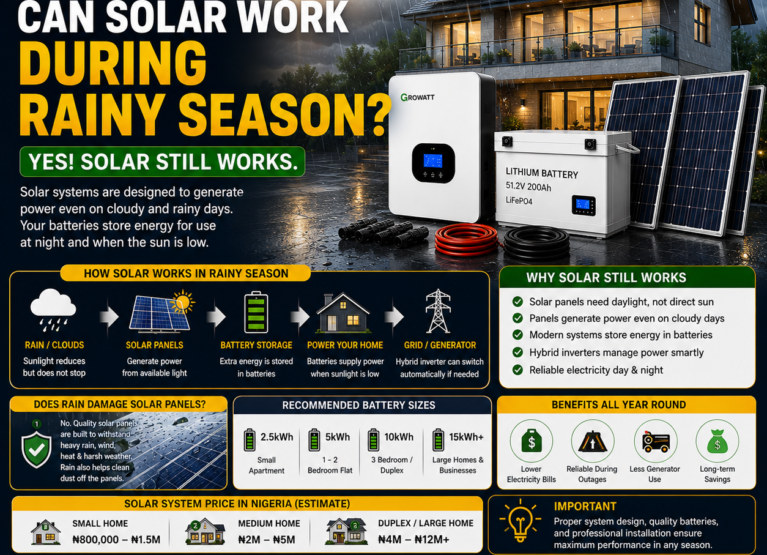
Does solar work during rainy season?
Yes. Solar panels still generate power during cloudy weather, although output may be slightly reduced.
How long do lithium batteries last?
Most lithium batteries last between 8 and 15 years, depending on usage.
Final Thoughts
Solar energy is no longer a luxury in Nigeria—it is becoming a necessity.
Whether you want to power the following:
- your home,
- office,
- shop,
- hotel,
- or hospital,
Investing in the right solar system can save you millions in long-term electricity and fuel costs.
The key is choosing:
- quality components,
- the right system size,
- and a trusted installer.
ArenaHub provides premium solar solutions for homes, businesses, hotels, offices, and shops across Nigeria.
✅ Professional Installation
✅ Lithium Battery Systems
✅ Hybrid Inverters
✅ Nationwide Delivery & Support
📞 WhatsApp: +2348103341096
🌐 www.ArenaHub.org
📩 Send us a message today for a free consultation.