English
 French
 German
 Italian


Best Inverter Battery for Home in Nigeria (2026 Buyer’s Guide)
One of the most important parts of any solar or inverter system is the battery. While solar panels generate electricity and the inverter converts it for home use, the battery stores electricity for backup during blackouts.
Choosing the wrong battery can lead to:
- poor backup time,
- constant battery replacement,
- slow charging,
- and wasted money.
That’s why many Nigerians ask the following:
“What is the best inverter battery for home use in Nigeria?”
In this detailed guide, we’ll explain:
- the best inverter batteries for homes,
- Lithium vs. tubular batteries,
- battery prices in Nigeria,
- how long batteries last,
- and how to choose the right battery for your needs.
Whether you live in Lagos, Abuja, Port Harcourt, Warri, or anywhere in Nigeria, this guide will help you make the right decision.
Best Inverter Battery for Home in Nigeria
Why Your Inverter Battery Matters
Your battery determines:
- how long your lights stay on,
- How many appliances can you power?
- charging speed,
- and overall system performance.
A good battery:
- lasts longer,
- charges faster,
- handles heavy loads better,
- and saves more money long-term.
A bad battery often leads to:
- overheating,
- weak backup,
- constant maintenance,
- and frequent replacement.
Also Check: ⚠️ Why Cheap Solar Is a Scam (The Truth Many Nigerians Learn Too Late)
Types of Inverter Batteries in Nigeria
The two most common inverter battery types in Nigeria are:
- Tubular Batteries
- Lithium Batteries
Let’s compare them.
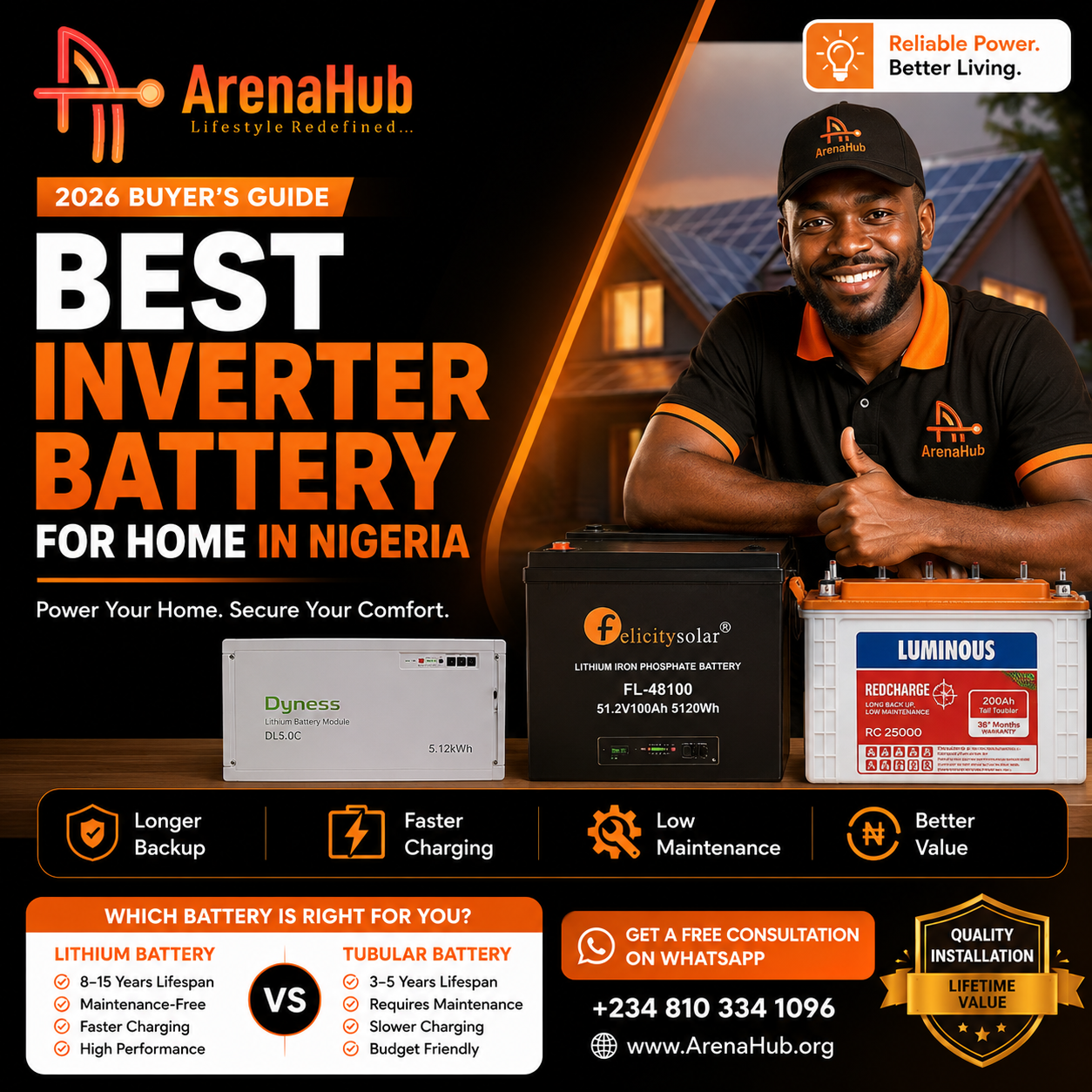
Best Inverter Battery for Home in Nigeria
Lithium vs Tubular Batteries
| Feature | Lithium Battery | Tubular Battery |
|---|---|---|
| Lifespan | 8–15 Years | 3–5 Years |
| Maintenance | Maintenance-Free | Requires Watering |
| Charging Speed | Fast | Slower |
| Weight | Lightweight | Heavy |
| Efficiency | High | Moderate |
| Space Usage | Compact | Bulky |
| Performance | Excellent | Good |
| Initial Cost | Higher | Lower |
Why Lithium Batteries Are Becoming More Popular
Many homes and businesses in Nigeria are switching to lithium batteries because they:
- last longer,
- require no maintenance,
- charge faster,
- save space,
- and provide better backup performance.
Although lithium batteries cost more initially, they often save more money long-term because they don’t require frequent replacement.
Best Inverter Battery Brands in Nigeria
Several battery brands are popular in Nigeria.
1. Felicity Lithium Batteries
Popular for:
- durability,
- fast charging,
- and hybrid solar systems.
2. Dyness Lithium Batteries
Known for:
- premium performance,
- smart battery management,
- and long lifespan.
3. Luminous Tubular Batteries
Commonly used for:
- budget inverter setups,
- homes,
- and small offices.
4. Mercury Batteries
Widely available and affordable for entry-level systems.
5. Pylontech Lithium Batteries
Popular for:
- premium residential systems,
- scalability,
- and smart energy storage.
Best Battery for Different Home Sizes
Single-Room Apartment
Recommended:
- 100Ah–150Ah battery
- 1.5kVA inverter
Suitable for:
- lights,
- fan,
- TV,
- phone charging.
1 Bedroom Flat
Recommended:
- 200Ah tubular OR 5kWh lithium battery
- 2kVA–3.5kVA inverter
Suitable for:
- refrigerator,
- TVs,
- fans,
- lights,
- laptops.
2–3 Bedroom Flat
Recommended:
- 10kWh–15kWh lithium battery
- 5kVA inverter
Suitable for:
- multiple TVs,
- freezer,
- washing machine,
- WiFi,
- small AC.
Large Homes
Recommended:
- 15 kWh–30 kWh lithium battery bank
- 10kVA+ inverter
Suitable for:
- air conditioners,
- pumping machines,
- large appliances,
- full-house backup.
Inverter Battery Prices in Nigeria (2026)
Prices vary depending on:
- brand,
- battery type,
- storage capacity,
- and market conditions.
Estimated Battery Prices
| Battery Type | Capacity | Estimated Price |
|---|---|---|
| Tubular Battery | 200Ah | ₦250,000 – ₦500,000 |
| Lithium Battery | 5kWh | ₦800,000 – ₦1.8 Million |
| Lithium Battery | 10kWh | ₦1.5 Million – ₦3 Million |
| Lithium Battery | 15kWh | ₦2.5 Million – ₦4 Million |
Prices may vary across Lagos, Abuja, Port Harcourt, and other cities in Nigeria.
How Long Do Inverter Batteries Last?
Battery lifespan depends on:
- usage,
- charging habits,
- maintenance,
- and installation quality.
Average Lifespan
| Battery Type | Expected Lifespan |
|---|---|
| Tubular Battery | 3–5 Years |
| Lithium Battery | 8–15 Years |
Proper installation and correct inverter sizing help batteries last longer.
Also Check: Solar Mistakes Nigerians Keep Making (2026 Guide)
Common Mistakes That Damage Batteries
1. Overloading the Inverter
Connecting too many appliances can damage both the inverter and the battery.
2. Using Low-Quality Solar Panels
Poor charging affects battery lifespan.
3. Poor Ventilation
Heat reduces battery efficiency and lifespan.
4. Deep Discharging
Allowing batteries to drain completely too often reduces performance.
5. Cheap Installation
Improper wiring and bad installation practices can destroy expensive batteries.
Best Battery for Solar Systems
For solar systems, lithium batteries are generally the best option because they:
- store more energy,
- charge faster,
- discharge efficiently,
- and integrate well with hybrid inverters.
Most modern solar installations in Nigeria now prefer lithium battery setups.
Tubular vs. Lithium: Which Should You Choose?
Choose Tubular Batteries If:
- Your budget is limited.
- You need basic backup.
- You don’t mind maintenance.
Choose Lithium Batteries If:
- You want long-term savings,
- faster charging,
- premium performance,
- and maintenance-free operation.
For most modern homes and businesses, lithium batteries are usually the better investment.
Best Inverter Battery for Shops & Businesses
Businesses need stable power because downtime affects sales and productivity.
Recommended options:
- 5kWh–15kWh lithium batteries,
- hybrid inverter systems,
- expandable battery banks.
Solar and lithium battery combinations are now common among the following:
- salons,
- pharmacies,
- offices,
- supermarkets,
- and hotels.
Also Check: ⚠️ Why Cheap Solar Is a Scam (The Truth Many Nigerians Learn Too Late)
Why Nigerians Are Investing More in Solar Batteries
Rising fuel prices and unstable electricity have made inverter systems more valuable than ever.
Benefits include:
- lower fuel expenses,
- reduced noise,
- uninterrupted power,
- lower maintenance,
- and long-term savings.
Many homeowners now see solar batteries as an essential investment rather than a luxury.
Frequently Asked Questions (FAQs)
Which battery is best for a home inverter?
Lithium batteries are generally considered the best because they last longer and require less maintenance.
How many batteries do I need for a 5kVA inverter?
It depends on your power usage and desired backup duration.
Can lithium batteries work without solar panels?
Yes. They can charge from NEPA or generators using compatible inverters.
How long does a lithium battery charge last?
Depending on usage, it can power a home for several hours or even overnight.
Are tubular batteries still good?
Yes. They remain a budget-friendly option for many homes.
Final Thoughts
Choosing the right inverter battery is one of the most important decisions when setting up a solar or backup power system.
The best battery depends on:
- your budget,
- energy needs,
- backup expectations,
- and future expansion plans.
For long-term reliability and premium performance, lithium batteries remain one of the best options available in Nigeria today.
A professionally installed system with quality batteries can provide years of reliable electricity while reducing dependence on generators and unstable grid power.
ArenaHub provides premium lithium batteries, hybrid inverters, solar panels, and professional installation services across Nigeria.
✅ Long Backup Time
✅ Fast Charging
✅ Maintenance-Free Lithium Systems
✅ Nationwide Delivery & Support
📞 WhatsApp: +2348103341096
🌐 www.ArenaHub.org
📩 Send us a message today for a free consultation.