English
 French
 German
 Italian


Introduction
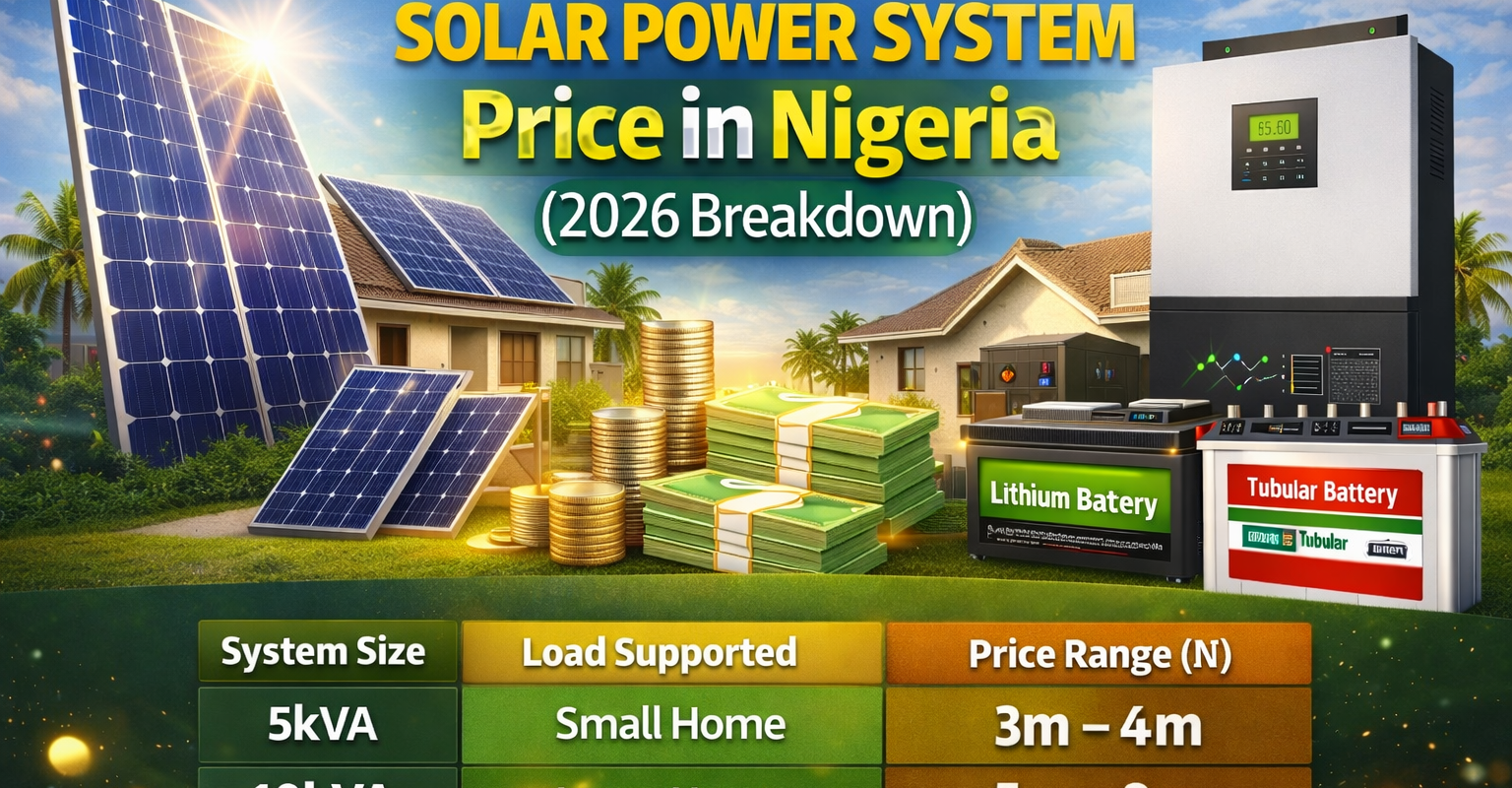
Solar energy is no longer just a luxury in Nigeria—it’s a necessity. With frequent power outages and rising diesel costs, investing in a solar power system can save households and businesses thousands of naira every month.
One of the most common questions Nigerians ask is, “How much does a complete solar system cost?”
This 2026 guide breaks down everything you need to know about solar system pricing in Nigeria, including:
- System components and their costs
- Sizing your system
- Battery and inverter options
- Installation charges
- Tips to save money while buying genuine products
By the end of this article, you’ll know exactly what to budget for your home or business solar system and how to purchase it safely with ArenaHub Global Enterprise.
What Determines the Cost of a Solar System
The total cost of a solar power system in Nigeria depends on several factors:
1. Inverter Size and Type
The inverter converts DC power from your panels into AC electricity. Inverter size depends on the total load of your home or business.
| Inverter Type | Price Range (₦) | Notes |
|---|---|---|
| 3.5 kVA – 5 kVA | 350,000 – 450,000 | Small homes |
| 7.5 kVA – 10 kVA | 650,000 – 1,200,000 | Medium homes/duplex |
| 10 kVA+ | 1,300,000+ | Large homes & small businesses |
Tip: Hybrid inverters are ideal for Nigerian homes as they allow grid backup, solar, and battery integration.
2. Battery Type
Batteries store solar energy for use during nighttime or cloudy days. Your choice affects cost significantly.
| Battery Type | Price Range (₦) | Lifespan | Notes |
|---|---|---|---|
| Tubular | 120,000 – 250,000 | 3–5 years | Cheaper, requires maintenance |
| Lithium | 400,000 – 5,000,000 | 10+ years | Expensive upfront, longer lifespan, low maintenance |
Pro Tip: Investing in lithium batteries may save money in the long run due to longevity and efficiency.
3. Solar Panels
Panels convert sunlight into electricity. Prices depend on wattage, type, and brand.
| Panel Type | Price per Panel (₦) | Notes |
|---|---|---|
| Monocrystalline 450W | 80,000 – 100,000 | Higher efficiency, more expensive |
| Polycrystalline 450W | 60,000–80,000 | Slightly less efficient, cheaper |
Recommendation: For Nigerian weather, monocrystalline panels are ideal, as they perform better in high temperatures.
4. Accessories
- Charge controllers: 120 Ah – 200 Ah (₦100,000 – 350,000)
- Cables, connectors, mounting frames: ₦30,000 – 100,000
- Surge protectors & monitoring devices: ₦20,000 – 50,000
Note: Skipping quality accessories can damage your system and appliances.
5. Installation Costs
Professional installation is crucial for safety, warranty, and efficiency.
- Small systems: ₦50,000 – 100,000
- Medium systems: ₦100,000 – 250,000
- Large/complex systems: ₦400,000+
⚠️ Avoid DIY installation—it often leads to poor performance and warranty issues.
Average Cost of Complete Solar Systems in Nigeria
Here’s a realistic breakdown:
| System Size | Components Included | Price Range (₦) | Notes |
|---|---|---|---|
| 3.5 kVA (Small Home) | 1 inverter, 4–6 panels, 4 tubular battery, accessories, installation | 1.8m – 2.5m | Ideal for 2–3 bedroom flats |
| 5 kVA (Medium Home) | Powers multiple ACs, pumps, and office equipment | 2.5m – 3.8m | Powers AC, freezer, pumps |
| 10 kVA+ (Large Home/Small Business) | 1 inverter, 15–20 panels, 2 lithium batteries, accessories, installation | 5m – 8m | 1 inverter, 4–6 panels, 4 tubular batteries, accessories, installation |
Tip: Prices vary by brand, quality, and region. Lagos & Abuja usually have slightly higher costs due to logistics.
How to Choose the Right System for Your Home or Business
Step 1: Calculate Your Load
- List all appliances you want to power simultaneously.
- Determine their power consumption in watts.
- Multiply by daily usage hours to get total energy requirement (kWh/day).
Step 2: Decide Between Tubular and Lithium Batteries
- Tubular: Cheaper, suitable for small homes
- Lithium: Long-lasting, supports high-load systems, better for medium-large homes or small businesses
Step 3: Choose Your Inverter
- Small home → 3.5 kVA – 5 kVA
- Medium home → 7.5 kVA – 10 kVA
- Large home/business → 10 kVA+
Step 4: Consider Expansion
Plan ahead: if you intend to add ACs or pumps in the future, buy an inverter with extra capacity.
Ways to Reduce Solar System Costs Without Sacrificing Quality
- Compare Quotes—Get 2–3 quotes from certified installers.
- Choose Appropriate System Size—Don’t overspend on a system larger than needed.
- Buy Genuine Products—Avoid counterfeit panels & inverters.
- Use Lithium Batteries Wisely—Longer lifespan reduces long-term costs.
- Bundle Installation – Many distributors, like ArenaHub, include installation in package deals.
Popular Solar System Packages in Nigeria
Small Home Package (3.5 kVA)
- 1 x 3.5 kVA hybrid inverter
- 4 x 450W monocrystalline panels
- 1 x 120Ah tubular battery
- Accessories + installation
- Price: ₦600,000
Medium Home Package (5 kVA)
- 1 x 5kVA hybrid inverter
- 8 x 450W panels
- 1 x 15kWh lithium battery
- Accessories + installation
- Price: ₦2.5m – ₦3.8m
Large Home / Small Business Package (10kVA+)
- 1 x 10kVA hybrid inverter
- 15–20 x 450W panels
- 2 x 15kWh lithium batteries
- Accessories + professional installation
- Price: ₦5m – ₦8m
⚡ All packages include system monitoring and warranty support from ArenaHub Global Enterprise.
Financing Your Solar System
- Cash Purchase: One-time upfront payment
- Installment Plans: Pay over 6–12 months
- Business Financing: Some distributors partner with banks for SMEs
Tip: Financing reduces initial stress, but always check interest rates.
Solar System ROI in Nigeria
Investing in solar is cost-effective in Nigeria:
- Average diesel generator cost per month: ₦30,000 – 50,000
- Solar system cost amortized over 5–7 years
- Savings: Up to ₦50,000–100,000 monthly for medium-large homes
Solar pays for itself in 3–5 years, then it’s pure savings after.
Common Questions About Solar System Prices
Q1: Why do solar system prices vary so much in Nigeria?
- Brand differences, battery type, inverter capacity, and installation quality.
Q2: Can I buy components separately?
- Yes, but buying a complete system from a trusted provider like ArenaHub ensures compatibility & warranty.
Q3: Are solar systems worth it outside Nigeria?
- Yes, in other African countries like Ghana, Kenya, and South Africa, solar saves money and improves energy reliability.
Why Choose ArenaHub Global Enterprise
ArenaHub provides:
- Genuine solar products (panels, inverters, batteries)
- Professional system design and installation
- After-sales support across Nigeria & Africa
- Free consultation and system sizing
📞 Contact WhatsApp: +2348103341096 or +2348071661967
💻 Visit: www.ARENAHUB.org
Conclusion
The cost of a complete solar system in Nigeria depends on system size, inverter, battery, and installation.
Key takeaways:
- Properly calculate your load before buying
- Choose genuine products & certified installers
- Consider long-term ROI over upfront cost
Investing wisely in solar today saves money, energy, and stress tomorrow.